Skin & tanning · Evidence tier B · #3 in test requests
GHK-Cu
copper peptide · GHK-Copper · GHK copper · copper tripeptide-1 (cosmetic ingredient name, INCI) · prezatide copper · glycyl-L-histidyl-L-lysine copper(II) complex
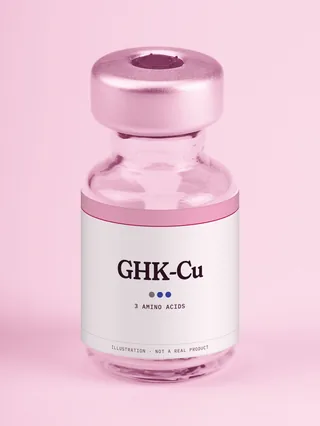
GHK-Cu is a copper-carrying peptide used in skin creams and now often injected. Small skin trials had mixed results, and we found no published study that injected it on its own in people12343.
Quick answers
- What is it?
- A chain of three amino acids bound to copper, also called copper peptide. The peptide occurs naturally in human blood11. It is sold in skin creams, and as vials that many buyers inject337.
- Does it work?
- Small trials on skin had mixed results. A gel healed diabetic foot ulcers better than a placebo gel1. A cream did no better than placebo on leg ulcers4. We found no published study that injected GHK-Cu on its own in people43.
- Is it safe?
- Unknown for injections: we found no published study that injected GHK-Cu on its own in people43. FDA warns they may cause immune reactions6. Too much copper is another possible risk315. On skin, copper can cause allergic reactions in some people15.
What it is
GHK-Cu is a complex of copper with GHK, a peptide of three amino acids (glycine, histidine and lysine) that occurs naturally in human blood11. At neutral pH one GHK molecule binds one copper(II) ion12. Early lab work suggested that GHK helps cells take up copper11. In rat wounds, GHK-Cu increased the buildup of collagen and glycosaminoglycans, the water-holding molecules of skin and connective tissue13. Lab and animal studies also report anti-inflammatory effects and growth of new blood vessels (angiogenesis)14. How it promotes new blood vessels is not settled: a 2026 review says the effects may come from copper-dependent enzymes, tissue remodeling, growth-factor signals or immune cells, and few studies separate these15. On cosmetic labels it appears as copper tripeptide-116.
Loren Pickart reported in 1973 that a small peptide in human blood kept normal liver cells alive longer in the lab and spurred the growth of liver tumor cells317. It was identified as glycyl-histidyl-lysine in 197718, and in 1980 Pickart’s group reported that it binds copper11. Pickart’s group later reported that blood levels fall with age, from about 200 ng/mL at age 20 to 80 ng/mL by age 6019. ProCyte, a Washington company organized in 1986, built wound, skin and hair products on the copper peptide and licensed it to Neutrogena in April 200020. FDA cleared ProCyte’s Iamin gel as a wound dressing, a medical device, on 5 February 199621.
Benefits: what the research shows
All controlled human trials of GHK-Cu that we could verify applied it to skin or wounds. In a multicenter randomized trial in diabetic foot ulcers, a GHK-Cu gel (Iamin) closed a median 98.5% of plantar ulcer area vs 60.8% with vehicle, and among plantar ulcers treated right after debridement (removal of dead tissue), infections were less common (7% vs 34%); the abstract does not give the number of patients1. In venous leg ulcers (86 evaluable patients), a 0.4% copper tripeptide cream did no better than placebo, while silver sulfadiazine cream beat both4. After CO2 laser resurfacing, GHK-Cu skin care did not speed the fading of redness or improve wrinkles on objective measures in the 13 patients who completed the trial, although users rated their skin quality higher (P = .04)2. Two split-face cosmetic trials were positive. In the vehicle-controlled arm of an 8-week facial trial (20 women), wrinkle volume fell by an average 24.1% on the GHK-Cu side vs 15.0% on the vehicle side (p<0.001); the serum’s maker funded the study5. In 18 adults, eyebrows treated with a 2% GHK-Cu serum for 12 weeks gained hairs from their starting count while the placebo side did not change significantly; the authors report better hair count and diameter than on the placebo side, but the abstract gives no statistic for that comparison23. A 2026 systematic review of GHK-Cu used alone for cosmetic purposes, with searches to March 2026, included 20 studies, 18 of them preclinical and 2 randomized trials, and said well-designed clinical trials are limited14. We found no published human study of GHK-Cu injected on its own43, and a 2026 review says human data on how it is absorbed, distributed and tolerated with repeated doses are absent15. The only published reports we found of people injected with a copper peptide are two uncontrolled hair-loss studies in which it was one ingredient of a scalp injection: a single-arm study of 1,000 patients given eight sessions 3 weeks apart, which reported the treatment was well tolerated44, and a review of the records of 18,918 men treated at one center, who also took finasteride and minoxidil, in which 3.4% had slight pain and 0.3% slight bleeding from the injections45. Neither shows what GHK-Cu itself does. Claims about lung, brain and whole-body effects rest on mouse and rat studies15. A registry record for a Phase 2 topical wound trial (NCT07437586, first posted 27 February 2026) is cited by a 2026 review and by a dosing site, but the same sponsor posted another record that calls itself “fictional”, so we do not count it15242526. GHK-Cu is tier B because completed controlled human trials exist, but all were topical and none tells us about injected products.
Key human studies
| Study | Design | People | Dose and route | Result |
|---|---|---|---|---|
| Mulder GD et al., Wound Repair and Regeneration 19941PubMed · DOI | Multicenter, randomized, evaluator-blinded, vehicle-controlled trial in diabetic neuropathic foot ulcers | – | Topical GHK-Cu gel (Iamin), a metered dose applied daily with standard ulcer care | Median plantar ulcer closure 98.5% vs 60.8% with vehicle (p<0.05); in plantar ulcers treated right after debridement, ulcer infections 7% vs 34% (p<0.05); number of patients not given in the abstract1 |
| Bishop JB et al., Journal of Vascular Surgery 19924PubMed · DOI | Prospective, randomized, evaluator-blinded, three-arm trial vs placebo and 1% silver sulfadiazine in venous stasis ulcers; 86 evaluable patients completed it (number randomized not given) | 86 | Topical 0.4% tripeptide-copper cream | No better than placebo; silver sulfadiazine reduced ulcer size more than both4 |
| Badenhorst T et al., Journal of Aging Science 20165DOI | Randomized, double-blind, split-face trial in women aged 40 to 65; one arm vs vehicle (n=20), one vs a Matrixyl 3000 product; funded by the serum’s maker | 40 | Topical GHK-Cu nano-carrier serum, twice daily for 8 weeks | Vs vehicle: wrinkle volume -24.1% vs -15.0% (p<0.001) and depth -20.3% vs -15.3% (p=0.012); in the other arm, 1 participant stopped after minor reactions on both sides of the face (GHK-Cu serum and a Matrixyl 3000 product)5 |
| Miller TR et al., Archives of Facial Plastic Surgery 20062PubMed · DOI | Randomized trial with blinded evaluators after CO2 laser resurfacing around the mouth; 13 patients completed it (number randomized not given) | 13 | Topical skin-care regimen with or without GHK-Cu after laser treatment; assessed at 12 weeks | No objective difference in redness, wrinkles or skin quality; patient-rated skin quality better with GHK-Cu (P = .04)2 |
| Bo SL et al., Procedia of Multidisciplinary Research 202623Source | Randomized, double-blind, placebo-controlled, split-face study (one eyebrow each); not indexed in PubMed | 18 | Topical 2% GHK-Cu serum, twice daily for 12 weeks | Hair count rose from baseline on the GHK-Cu side (p<0.05) but not significantly on the placebo side; the authors report better count and diameter than the placebo side, mainly at week 12, without a statistic for that comparison; no serious adverse effects or allergic reactions reported23 |
Doses studied
Doses below are what studies used or what a label says. They are not advice, and gray-market products may not contain what their label says.
In human studies
Only topical use has been tested in controlled human trials. Trials used a daily metered dose of GHK-Cu gel on diabetic foot ulcers1, a 0.4% cream on venous ulcers4, a nano-carrier serum twice daily for 8 weeks on the face5, and a 2% serum twice daily for 12 weeks on the eyebrows23. We found no human study of an injected dose of GHK-Cu on its own43. The two published human reports of injected copper peptide we found used multi-ingredient scalp injections for hair loss, and neither the full text of one nor the abstract of the other gives the amount of copper peptide4445.
In animal studies
In mice with drug-induced lung fibrosis, GHK-Cu was injected into the abdomen (intraperitoneally) at 0.2, 2 or 20 µg/g on alternate days35. In a mouse model of Alzheimer’s disease, it was given into the nose at 15 mg/kg three times a week for 3 months36. In rats, it was injected at several concentrations into wound chambers implanted under the skin13.
What users report Anecdotal · not validated · not a recommendation
One dosing page aimed at injectors lists 1 to 2 mg injected under the skin once a day, 5 days a week, or 2 mg three times a week. The same page says the published human evidence is mostly topical or wound-focused and does not validate a universal injectable dose26.
- Half-life
- No human value found34In rats given GHK intravenously, it was rapidly broken down to the dipeptide HK, which was also cleared rapidly; the abstract gives no numeric half-life. We found no human data for any route.
- Routes
- Topical creams, serums and gels (human trials)
- Wound gels and dressings (human trials)
- Subcutaneous injection (common in gray-market use; we found no human studies of GHK-Cu alone)
- Scalp injection as one ingredient of hair-loss mixtures (two uncontrolled human studies)
- Intraperitoneal injection and intranasal (animal studies only)
Legal status
- United States
- Not approved by FDA as a drug for any use. A search of Drugs@FDA on 1 October 2026 found no approved product containing prezatide copper27. GHK-Cu is sold as a cosmetic ingredient3. In 1996 FDA cleared ProCyte’s Iamin gel as a wound dressing through the 510(k) device pathway, which is not a drug approval21.
- US pharmacies
- Non-injectable GHK-Cu (for example, topical) is in Category 1 of FDA’s interim 503A policy. That means FDA does not intend to act against pharmacies that compound it under the policy’s conditions while the agency decides whether to add it to the 503A bulks list728. Injectable GHK-Cu is different. It was previously in Category 2, the group FDA flags for possible significant safety risks; after its nomination was withdrawn, FDA moved it to a “nominated but withdrawn” list with a warning about immune reactions. It is now in no category, and FDA’s interim policy covers only Category 1 substances, so by our reading pharmacies have no 503A pathway to compound it6728. The non-injectable form briefly left Category 1 as well: FDA removed it on 22 April 2026 when the GHK-Cu nominations were withdrawn, then added it back after one nominator clarified on 5 May 2026 that it had withdrawn only the injectable route. FDA intends to consult its Pharmacy Compounding Advisory Committee on GHK-Cu before the end of February 2027; as of 8 October 2026 the categories list was last updated on 14 May 20267.
- Other countries
- Canada: a Health Canada advisory of 24 December 2025 on unauthorized products seized from a Vancouver gym and sold online listed injectable vials labeled as GHK-Cu and as “Glow” and “Klow” blends containing it29. A 9 April 2026 advisory again listed GHK-Cu among seized unauthorized injectable peptides, and a supplier recalled GHK-Cu and BPC-157 powders from compounding and community pharmacies as unauthorized active pharmaceutical ingredients (Type I recall dated 5 May 2026)910. Australia: GHK-Cu is not named in the Poisons Standard in force from 1 October 2026; its prescription-only Schedule 4 entry for “copper compounds for human use” exempts low-copper preparations, and we did not establish how it applies to GHK-Cu products30. UK and EU: not verified.
- Sport
- Not named on the 2026 Prohibited List or on the 2027 List, which takes effect on 1 January 20273132. Class S0 bans at all times any substance that no other section of the List covers and that has no current approval by a government health authority for human therapeutic use31. We found no drug approval for GHK-Cu, but a GHK-Cu wound gel was cleared as a US medical device in 1996, so whether S0 applies is unclear (our reading, not a WADA ruling)21. Class S2 also bans unnamed growth factor modulators affecting blood-vessel growth or regenerative capacity31. GHK-Cu promotes blood-vessel growth in lab and animal studies14, so by our reading S2 could also apply; we found no WADA ruling on GHK-Cu under either class. For 2027, WADA added “peptides” to the S0 examples and warned that a peptide not named on the List may still be prohibited3233.
Quality and the gray market
What testing finds
Finnrick, an independent testing service, lists 939 GHK-Cu tests covering 140 vendors between 22 April 2025 and 25 September 2026. Of its latest 200 tests (23 June 2026 to 25 September 2026), 152 passed, 43 failed and 5 were incomplete, so 22% of completed tests failed Finnrick’s default ‘purity focus’ standard: at least 99.5% purity and a measured dose within 35% of the label8. In May 2026 a Canadian supplier recalled GHK-Cu powder that had gone to compounding and community pharmacies as an unauthorized active ingredient10. Health Canada warns that unauthorized injectable peptides may contain solvents, heavy metals, particles or microbes9. A 2026 review notes that no validated human safety threshold exists for GHK-Cu or its free copper15.
How it is sold
GHK-Cu is sold two ways: as an ingredient in ordinary skin creams and serums, and as “research use only” vials that many buyers inject under the skin, sometimes “stacked” with other peptides337. On one US-facing vendor’s shop page, sorted by the vendor’s own popularity ranking on 1 October 2026, a blend called “KLOW” (GHK-Cu 50 mg with 10 mg each of BPC-157, TB-500 and KPV) ranked fourth of 41 products, and GHK-Cu vials and a “GLOW” blend (GHK-Cu with BPC-157 and TB-500) were also listed37. Finnrick calls GHK-Cu its third most-requested product. Since Finnrick began free public testing in May 2025, people have sent it more than 21,000 test requests for all products38. By our count from the chart data on that page, GHK-Cu drew 1,837 of 21,253 requests from May 2025 to May 2026 (8.6%), after retatrutide and tirzepatide, and its monthly requests rose from 7 in May 2025, when Finnrick received 302 requests for all products, to 285 in May 202638. On 1 April 2026 a Utah osteopathic physician was indicted on charges of receiving misbranded drugs from China, which prosecutors say included GHK-Cu, and selling them to more than 200 patients; the charges are allegations39.
Side effects and risks
- Unknown safety of injection: we found no published human study of GHK-Cu injected on its own, and FDA says compounded GHK-Cu injections may cause immune reactions because the peptide can clump (aggregate) and carry impurities643.
- Too much copper: a researcher who studies GHK-Cu names copper overload as a possible risk of injecting it, and a 2026 review says injectable products would need studies that track copper build-up in the liver, nerves and kidneys315.
- Allergy and skin reactions: copper is a recognized contact allergen in some people15. In one facial trial, 1 of 40 women stopped after minor reactions on both sides of the face, one side treated with the GHK-Cu serum and the other with a comparison product; they went away without treatment5.
- Blood-vessel growth (theoretical): GHK-Cu promotes angiogenesis in lab and animal studies, which a 2026 review says could be unwanted in tumors or in eye diseases with abnormal vessel growth15.
- Product quality: 22% of Finnrick’s recent completed GHK-Cu tests failed its purity or dose standard, and unregulated injectables may be contaminated89.
- Legal and sport risk: injectable GHK-Cu has no US compounding pathway, Canada has seized it, and WADA warns that unnamed peptides may still be banned7933.
Documented harms
- 9 Apr 2026Health Canada told consumers not to use unauthorized injectable peptides, listing GHK-Cu among products it had seized. It warned of infections, allergic reactions and contamination with solvents, heavy metals, particles or microbes9.
- 30 Jul 2026As of openFDA’s 30 July 2026 update, FDA’s adverse event database (FAERS) held 2 reports naming GHK-Cu, both listing it as another product taken rather than the suspected cause: anaphylaxis (a severe allergic reaction) with fainting where sermorelin was the suspect (received 26 June 2025), and a lymphoid cancer where hCG and Ozempic were the suspects and GHK-Cu was part of a “GLOW” blend (received 27 May 2026). These reports do not show that GHK-Cu caused harm40.
- 7 Sep 2026A doctor of nursing practice who runs a wellness clinic near Seattle told NPR of seeing GHK-Cu self-injectors with injection-site irritation, infections and, in some cases, raised liver enzymes and copper levels. NPR noted it is unclear whether GHK-Cu or other undisclosed substances or impurities were responsible3.
Questions people ask
What is GHK-Cu used for?
It is sold in skin creams and serums for firmer skin and fewer wrinkles, and as “research use only” vials that many buyers inject, sometimes with other peptides337. The controlled trials we could verify all applied it to skin or wounds, with mixed results124523. We found no published study that injected GHK-Cu on its own in people43.
Is GHK-Cu FDA approved?
No. FDA has not approved GHK-Cu as a drug for any use, and it is sold as a cosmetic ingredient327. A GHK-Cu wound gel was cleared as a medical device in 1996, which is not a drug approval21.
Can a compounding pharmacy make GHK-Cu injections?
Not under FDA’s current 503A policy. As of 8 October 2026 only non-injectable GHK-Cu is in Category 1, and FDA plans to consult its advisory committee on GHK-Cu before the end of February 20277.
Does topical GHK-Cu work?
Small trials give mixed answers. Two split-face cosmetic studies found less wrinkle volume or more eyebrow hair than with a placebo serum, while a laser-aftercare trial and a leg-ulcer trial found no objective benefit24523. Our guide to peptides in skincare sets these trials beside those of Matrixyl, Argireline and retinoids.
Is injecting GHK-Cu safe?
Nobody knows. We found no published human study of GHK-Cu injected on its own, and two uncontrolled hair-loss studies that injected it as one ingredient of a mixture cannot show its own safety434445. FDA flags a risk of immune reactions from compounded injections, and independent tests find that some products fail purity or dose checks68.
What are GLOW and KLOW peptide blends?
They are vendor blends: one vendor sells “GLOW” as GHK-Cu 50 mg with 10 mg each of BPC-157 and TB-500, and “KLOW” as the same plus KPV37. Health Canada’s 2025 list of products seized from a Vancouver gym included “Glow” and “Klow” vials labeled with the same amounts29. We found no human study of these blends or of injected GHK-Cu on its own43.
What are the side effects of GHK-Cu?
In one facial trial, 1 of 40 women stopped after minor reactions on both the side treated with the GHK-Cu serum and the side treated with a comparison product; they went away without treatment5. Copper is a recognized contact allergen in some people15. A clinician who runs a wellness clinic told NPR of seeing injection-site irritation, infections and, in some cases, raised liver enzymes and copper levels in people who inject it, though NPR noted the cause was unclear3.
Does GHK-Cu help hair growth?
No one knows for scalp hair: in a PubMed search on 7 October 2026 we found no study that tested GHK-Cu alone on hair loss in people, only products that mixed GHK or a copper peptide with other active ingredients, two of them injected into the scalp414445. In one such trial, 45 men with pattern hair loss used a product combining GHK with 5-aminolevulinic acid or a placebo for 6 months; hair counts rose more on the lower of two strengths than on placebo, and hair length and thickness did not differ between groups42. In a placebo-controlled trial in 18 adults, eyebrows treated with a 2% GHK-Cu serum for 12 weeks gained hairs while the placebo side did not change significantly; the authors report more and thicker hairs than on the placebo side but give no statistic for that comparison23. Our guide to peptides for hair sets these studies beside minoxidil and finasteride.
What is still unknown
- How injected GHK-Cu is absorbed, how long it lasts and what copper levels it produces in people are unknown.
- How much copper peptide the scalp injections in the two hair-loss studies contained is not stated in the full text of one or the abstract of the other.
- The number of patients in the 1994 diabetic ulcer trial is not given in its abstract, and whether ProCyte ran other drug trials of prezatide copper acetate (Iamin) with unpublished results could not be verified.
- Facial studies that GHK-Cu reviews describe as placebo-controlled (71, 41 and 67 women over 12 weeks) trace to a 2002 meeting report, an unpublished report and a book chapter that we could not open.
- Registry record NCT07437586 shares its sponsor, contact and site with a record that calls itself fictional and one titled as a mock study; whether it is a real trial is unconfirmed.
- No PubMed case reports of harm from injected GHK-Cu were found; the liver and copper findings reported to NPR are unpublished.
- Whether WADA would treat GHK-Cu as an S0 substance, given the 1996 US device clearance, or as an S2 growth factor modulator has not been ruled on.
- How Australia’s Schedule 4 entry for copper compounds applies to GHK-Cu products, and GHK-Cu’s status under UK and EU medicines law, were not established.
- What FDA’s advisory committee will recommend on GHK-Cu before the end of February 2027.
Sources
- 1Enhanced healing of ulcers in patients with diabetes by topical treatment with glycyl-l-histidyl-l-lysine copper Wound Repair and Regeneration, Oct 1994. pubmed.ncbi.nlm.nih.gov
- 2Effects of topical copper tripeptide complex on CO2 laser-resurfaced skin Archives of Facial Plastic Surgery, Jul 2006. pubmed.ncbi.nlm.nih.gov
- 3The copper peptide trend has gone from creams to injections — ahead of the science NPR, 7 Sep 2026. npr.org
- 4A prospective randomized evaluator-blinded trial of two potential wound healing agents for the treatment of venous stasis ulcers Journal of Vascular Surgery, Aug 1992. pubmed.ncbi.nlm.nih.gov
- 5Effects of GHK-Cu on MMP and TIMP Expression, Collagen and Elastin Production, and Facial Wrinkle Parameters Journal of Aging Science, 22 Dec 2016. doi.org
- 6Certain Bulk Drug Substances for Use in Compounding that May Present Significant Safety Risks U.S. Food and Drug Administration, 22 Apr 2026. fda.gov
- 7Bulk Drug Substances Nominated for Use in Compounding Under Section 503A of the Federal Food, Drug, and Cosmetic Act (categories list) U.S. Food and Drug Administration, 14 May 2026. fda.gov
- 8GHK-Cu: vendor test results Finnrick, 25 Sep 2026. finnrick.com
- 9Think twice before injecting peptides bought online: unauthorized products can seriously harm you (RA-81874) Health Canada, 9 Apr 2026. recalls-rappels.canada.ca
- 10GHK-Cu & BPC-157 powder: Unauthorized active pharmaceutical ingredients (RA-82047) Health Canada, 7 May 2026. recalls-rappels.canada.ca
- 11Growth-modulating plasma tripeptide may function by facilitating copper uptake into cells Nature, 25 Dec 1980. pubmed.ncbi.nlm.nih.gov
- 12Structure of the glycyl-L-histidyl-L-lysine--copper(II) complex in solution Biochemistry, 14 Sep 1982. pubmed.ncbi.nlm.nih.gov
- 13In vivo stimulation of connective tissue accumulation by the tripeptide-copper complex glycyl-L-histidyl-L-lysine-Cu2+ in rat experimental wounds The Journal of Clinical Investigation, Nov 1993. pubmed.ncbi.nlm.nih.gov
- 14The Regenerative Potential of GHK-Cu in Aesthetic Medicine Aesthetic Surgery Journal, 20 Aug 2026. pubmed.ncbi.nlm.nih.gov
- 15GHK-Cu as a Bioactive Metallopeptide and Drug-Delivery Cargo: Coordination Chemistry, Formulation Science, Therapeutic Evidence, and a Translational Roadmap Pharmaceutics, 27 Aug 2026. pmc.ncbi.nlm.nih.gov
- 16PREZATIDE COPPER (UNII 6BJQ43T1I9) substance record FDA Global Substance Registration System (GSRS), accessed 1 Oct 2026. precision.fda.gov
- 17Tripeptide in human serum which prolongs survival of normal liver cells and stimulates growth in neoplastic liver Nature New Biology, 16 May 1973. pubmed.ncbi.nlm.nih.gov
- 18Growth-modulating serum tripeptide is glycyl-histidyl-lysine Experientia, 15 Mar 1977. pubmed.ncbi.nlm.nih.gov
- 19GHK Peptide as a Natural Modulator of Multiple Cellular Pathways in Skin Regeneration BioMed Research International (PMC full text), 2015. pmc.ncbi.nlm.nih.gov
- 20ProCyte Corporation annual report (Form 10-K) for fiscal year 2000 US Securities and Exchange Commission (EDGAR), 16 Mar 2001. sec.gov
- 21510(k) Premarket Notification K953853: Iamin Gel Wound Dressing (Procyte Corp.) U.S. Food and Drug Administration, 5 Feb 1996. accessdata.fda.gov
- 22PREZATIDE COPPER ACETATE (UNII A3LEI4P1NB) substance record FDA Global Substance Registration System (GSRS), accessed 1 Oct 2026. precision.fda.gov
- 23The efficacy of 2% copper peptide (GHK-Cu) serum for eyebrow hypotrichosis: a randomized, double-blind, vehicle-controlled, split-face comparative study Procedia of Multidisciplinary Research, 22 May 2026. so09.tci-thaijo.org
- 24Topical GHK-Cu Gel for Acute Skin Wound Healing (NCT07437586) ClinicalTrials.gov, 27 Feb 2026. clinicaltrials.gov
- 25TB-500 (Thymosin Beta 4 17-23 Fragment) for Cardiovascular Biomarkers in Stable ASCVD (NCT07487363) ClinicalTrials.gov, 23 Mar 2026. clinicaltrials.gov
- 26GHK-Cu (50 mg Vial) Dosage Protocol PeptideDosages.com, 26 Sep 2026. peptidedosages.com
- 27Drugs@FDA search for products containing prezatide (openFDA drugsfda endpoint; no matches) U.S. Food and Drug Administration (openFDA), accessed 1 Oct 2026. api.fda.gov · data query
- 28Bulk Drug Substances Used in Compounding Under Section 503A of the FD&C Act U.S. Food and Drug Administration, 14 May 2026. fda.gov
- 29Unauthorized health products sold online and seized at Rize Fitness may pose serious health risks (RA-81403) Health Canada, 24 Dec 2025. recalls-rappels.canada.ca
- 30Therapeutic Goods (Poisons Standard—October 2026) Instrument 2026 (F2026L01327) Federal Register of Legislation, Australian Government, 28 Sep 2026. legislation.gov.au
- 31World Anti-Doping Code International Standard: Prohibited List 2026 World Anti-Doping Agency, 24 Sep 2025. wada-ama.org
- 32World Anti-Doping Code International Standard: Prohibited List 2027 World Anti-Doping Agency, 21 Sep 2026. wada-ama.org
- 33Summary of Major Modifications and Explanatory Notes: 2027 Prohibited List World Anti-Doping Agency, 21 Sep 2026. wada-ama.org
- 34Simultaneous determination of glycyl-L-histidyl-L-lysine and its metabolite, L-histidyl-L-lysine, in rat plasma by high-performance liquid chromatography with post-column derivatization Journal of Chromatography B, 25 Apr 1997. pubmed.ncbi.nlm.nih.gov
- 35Protective effects of GHK-Cu in bleomycin-induced pulmonary fibrosis via anti-oxidative stress and anti-inflammation pathways Life Sciences, 15 Jan 2020. pubmed.ncbi.nlm.nih.gov
- 36Behavioral and neuropathological features of Alzheimer’s disease are attenuated in 5xFAD mice treated with intranasal GHK peptide Aging Pathobiology and Therapeutics, 2024. pubmed.ncbi.nlm.nih.gov
- 37Ascension Peptides shop page sorted by popularity Ascension Peptides (vendor), accessed 1 Oct 2026. ascensionpeptides.com (seller page, deliberately not linked)
- 38We’d Rather Buy the Future Than Wait For It Finnrick, 10 Jun 2026. finnrick.com
- 39Utah Licensed Osteopathic Physician Indicted for Allegedly Receiving Misbranded Drugs from China and Selling them to Patients U.S. Attorney’s Office, District of Utah, 1 Apr 2026. justice.gov
- 40FAERS reports listing GHK-Cu (openFDA drug adverse event endpoint) U.S. Food and Drug Administration (openFDA), 30 Jul 2026. api.fda.gov · data query
- 41PubMed search: GHK-Cu, copper peptide or GHK with hair, alopecia or follicles (20 results) National Library of Medicine (PubMed), accessed 7 Oct 2026. pubmed.ncbi.nlm.nih.gov
- 42Efficacy of a Complex of 5-Aminolevulinic Acid and Glycyl-Histidyl-Lysine Peptide on Hair Growth Annals of Dermatology, Aug 2016. pubmed.ncbi.nlm.nih.gov
- 43PubMed search: GHK-Cu or copper peptide names with injection terms (28 results; two injected people, each with a copper peptide as one ingredient of a hair-loss mixture) National Library of Medicine (PubMed), accessed 8 Oct 2026. pubmed.ncbi.nlm.nih.gov
- 44Intradermal injections of a hair growth factor formulation for enhancement of human hair regrowth - safety and efficacy evaluation in a first-in-man pilot clinical study Journal of Cosmetic and Laser Therapy, Oct 2018. pubmed.ncbi.nlm.nih.gov
- 45Androgenetic Alopecia Treatment in Asian Men The Journal of Clinical and Aesthetic Dermatology, Jul 2018. pubmed.ncbi.nlm.nih.gov
Not medical advice. This page reports what studies and regulators say; it does not recommend using any product. How we grade evidence · Report an error.